Friday, March 13, 2026

Real Updates


It’s almost been two months since I walked away from what I guess I’d call my corporate clinical job. Seven days shy of that marker, and honestly, I just needed to sit down and reflect—to give myself an update and maybe share one with you all. Because, damn, it’s been a wild ride with all kinds of feelings tangled up in it.

Leaving that clinical role wasn’t easy, but I had a backup plan—some contract work with this incredible online addiction recovery app. That gig has been amazing, a steady anchor as I figured out what was next. And what came next surprised even me: I put together my own business, fast and furious. This blog right here is where it all started—realizing that sharing my story, talking openly, actually meant something to people. That it could help, connect, maybe even change lives. Over these past two years of writing, I’ve watched that happen, and it’s been nothing short of incredible.

To you—the readers, the likers, the sharers, the folks who restack and keep coming back—you’ve become my stability. My gratitude for you runs deep. To the people I work with every day, my professional tribe, thank you for being part of this journey. For the first time, maybe not ever in my life but definitely for the first time in a long while, I feel this deep-down certainty: this is going to be an amazing ride.

Starting my business from scratch? No capital, no cash, just grit and a plan. I found a student entrepreneur program to file my LLC for free—that’s how broke I was. But now, looking at my bank account with about $2,000 in it, that number might not mean much to some, but to me? It’s every dream, every hope, every prayer paying off. It’s proof that starting from nothing can lead to something real.

And then there’s my first client—what an experience. The work we’re doing is personalized on a level I never even imagined possible. It’s real connection and real impact, and it’s blown me away. To my first client, thank you. You’ve helped shake off that imposter syndrome just a little more, and I appreciate you for that.

Last week, I got my business cards. Just ordered a thousand flyers to spread the word. I’m diving into my community, ready to network face to face, and honestly, I can’t wait. I was a hustler in a past life—talked for a living, moved product, made deals. Now? I talk for a living, but it’s a whole new kind of hustle. Call it a 360, 180, whatever—you do the math. I’m pulling all the pieces together, tapping into local networks (even the visitor bureau, which isn’t called the chamber anymore, but old habits die hard). I’ve got my door sticker, banners with my business name, and I’m making connections like a pro.

I’ve been networking for six years, and now it’s all coming together. Dreams are turning into reality, and the opportunities keep rolling in. The timing couldn’t be more perfect. I still remember being fresh and green in residential, telling people to focus on making the next right choice, believing things would get better. And here I am—walking, talking proof that they do.

Sure, I’ve made mistakes. Hell, I’ve had my share of fuck-ups. But at the end of the day, I’m doing something good—for me, for others. I’m striving to be the person I wish I’d had when I needed one most. Whether it’s huge leaps or tiny, almost invisible steps, if it matters to even one person, then it’s worth it.

Progress is progress, no matter the size. And this? This is just the beginning.

Thanks for being part of the ride.

Wednesday, March 4, 2026

I'm an Addict & I/m NOT Sorry 2.0


Let’s get real for a second. If you’re reading this, chances are you or someone you love has been through the wringer of addiction. And if that’s the case, you know the worst part isn’t the withdrawals, the broken promises, or those gut-wrenching moments of clarity on the bathroom floor. It’s the shame. Oh, the shame. The kind that soaks into your bones, the kind that makes you believe every awful thing you’ve ever heard about yourself.

But I’m here to tell you something: fuck the shame. No, really. Fuck it right in the ear. You don’t need that poisonous garbage holding you back anymore.

I’m not going to sugarcoat it. I’m an addict. I’ve lied. I’ve stolen. I’ve woken up in strange places with even stranger people. I’ve done the kind of things that should’ve written me off for good. But you know what? I am still here. I am still a person, no matter what I’ve done. And I deserve to be happy, to love and be loved, to leave something better than I found it.

You can’t change your past. That ship has sailed, baby. But you can change your now. And your now is the next decision you make. Is it a step toward the light, or back into the dark? That’s yours to choose—every single day.

Two years ago, I wrote those words and people took notice. It was the first time I felt like maybe, just maybe, my story could matter. Since then my world has cracked wide open. I got married. My husband adopted my two kids—last week, we sat in a courtroom and listened as a judge, in a court of law, told us how amazing we are. Full circle, all the way. I used to stand in front of judges praying for mercy. Now I’m standing there being told I am more than my past. That my family, built out of all this chaos and hope and hard work, is something to be celebrated.

I left my safe clinical job. I started my own business—Progress is Progress—because I was sick of the one-size-fits-all recovery bullshit. I wanted to be the person I needed when I was clawing my way out. Now I get to do that. Every day, I get to show up for people the way I wish someone had shown up for me.

I’m not just talking to the people in the trenches. I’m talking to the families, too. The ones who sit up at night waiting for the phone to ring. The ones who love us even when we’re impossible to love. I see you. I know how hard it is, how lonely and helpless it can feel. But there is hope. There are full-circle moments. There are days you’ll walk into a courtroom and hear someone in a robe and a gavel call you amazing. That can happen. That’s real.

And to anyone out there still struggling, still hearing “junkie,” “meth head,” “lost cause,” every time you look in the mirror—listen to me. Those words are lies. You are not worthless. You are not broken beyond repair. You are a human being who deserves peace, love, happiness, and a damn good night’s sleep. You deserve a life, just like anybody else.

Yeah, there will be setbacks. There will be days when standing up feels impossible. But you get back up anyway. That’s what matters. You keep moving. You keep choosing the next right thing, even if it’s just eating a vegetable or showing up to a meeting or hugging your kid a little tighter.

Now, let’s get something straight for the haters, the doubters, the ones who whisper that addicts can’t change, that we’re doomed to screw up forever: you don’t get to write my story. You don’t get to decide what’s possible for me, or for anyone like me. Every time I fall, I get back up. Every time someone says I can’t, I prove them wrong just by living, just by loving, just by building something beautiful out of the ashes.

If you’re ready to leave the shame behind, if you’re ready to take your power back, come find me. Read my blog. Join our Progress is Progress community. This is how I’m supporting my family—by showing up, by telling the truth, by making the world a little more beautiful than I found it.

Screw the shame. Screw the labels. We are warriors. We are survivors. And we are not sorry.

Let’s get on with the living.

— Belle

Tuesday, March 3, 2026

The Gray After the High: What Nobody Tells You About Getting Sober


I didn’t want to wake up. Not in the poetic sense—just in the dead literal, every-morning kind of way. I’d open my eyes and there would be the same ceiling, the same mess of diapers and bottles and sticky juice cups, the same shriek of cartoons from the living room. My body felt like jello in a too-tight skin. Nothing smelled good. Food tasted like drywall. My toddlers would crawl across me, sticky hands and wild giggles, and I could barely register it. I wanted to want to laugh. I wanted to feel anything. Instead, I just went through the motions, autopilot, every day.

Nobody tells you that sometimes, the nothingness that comes after quitting drugs is worse than the pain that came before.

“Do you remember the first time you realized you couldn’t feel anything?”For me, it was after I quit meth. The cravings were hell, sure. But the numbness? That was its own kind of torture. I couldn’t enjoy my kids in their chubby-cheeked, toddler-cutest years. I couldn’t enjoy food, music, or even relief. I’d sit through five million viewings of the Lorax, and all it did was make me want to crawl out of my skin.

And I know I’m not alone. Matt J., who got sober after a decade on pills, told me, “I thought quitting would make me feel alive again. Turns out, it made me feel like a robot.” 

Sarah T., a mom in my group, said, “I’d do anything to feel pain, even. Just to know I still could.”

Why Numbness Happens: The Science (For Real People)

Let’s break it down: Methamphetamine (and most drugs of abuse) hijack your brain’s dopamine system. Dopamine is what lets you feel pleasure, motivation, satisfaction. When you use, your brain gets a tidal wave of it—so much so that, eventually, your brain stops making “normal” amounts. Why bother, if you’re pouring in gallons every day?

So when you stop, your brain is suddenly running on fumes. Not just metaphorically. Research shows (Volkow et al., 2011; Wang et al., 2012) that dopamine activity is physically lower in people post-addiction. You can’t just “choose happiness”—your brain literally can’t access it yet.

Imagine a city after a blackout. The lights don’t all come back on at once. Some streets stay dark for weeks. That’s your brain in early recovery.

The Physical Reality: What Numbness Feels Like

Let’s get graphic.

I’d go days without a shower because water felt like nothing—like standing in a cold cloud. Food was either tasteless or made me want to gag. Sex? Don’t even get me started. For months, I didn’t want it. Then sometimes I’d crave it, just to feel something. But sex without drugs felt awkward, mechanical, pointless. I’ve heard this from dozens of people: sex is either all you want, or the last thing on your mind, but it never feels “right” for a while.

My hands would shake. Sometimes, my insides felt like they were made of Jell-O—wobbly, unstable. I’d look at my kids, at their impossibly big eyes and sticky faces, and feel nothing but guilt for not being able to feel joy.

And I know you’re out there, reading this, feeling the same way. So let me ask:

Have you ever felt so empty that even pain would be a relief?

The Messy Middle: Fighting for Every Feeling

Here’s the truth: Recovery isn’t a straight path from misery to joy. There’s a middle part—maybe months, maybe a year or more—when you’re slogging through the gray. You feel like a ghost in your own life. You wonder if you’re broken forever.

I almost gave up. More than once. Some days, the only thing that got me out of bed was the sound of my kids fighting over a juice box. Other days, I wanted to disappear. I relapsed. I screamed into pillows. I watched the sun rise and set and felt nothing.

But then, one day, I laughed at something stupid on TV. Just for a second—a flicker—and then it was gone. Another time, the smell of fall leaves hit me when I took out the garbage, and I actually noticed it. These tiny, blink-and-you-miss-it victories? They matter. They’re proof your brain is rebooting, one light at a time.

How Long Does It Take to Feel Again?

Nobody wants to hear this: It takes as long as it takes. Dopamine systems can take months, a year, even more to heal. Some people start to feel better in a few weeks. Some take longer. There’s no magic number.

But your brain is plastic—it can heal, even after years of being hijacked. What matters is that it’s possible.

How to Actually Feel Again: Real, Practical Steps

1. Move Your Body—Even When You Don’t Want To

Science shows exercise boosts dopamine. I started with slow walks around the block. Some days, just stretching was all I could do.

2. Eat Real Food

Protein, healthy fats, fresh stuff. It’s not glamorous, but your brain needs the building blocks.

3. Sit With the Discomfort

When feelings do start to come back—anxiety, sadness, random anger—they’re intense. Don’t run. Set a timer. “Feel this for 60 seconds, then breathe.” Repeat.

4. Find Micro-Joys

Don’t wait for big happiness. Grab the tiniest sparks—a warm mug, the way your kid’s hair smells, a song that makes you want to cry. At first, it feels fake. Over time, it teaches your brain to notice pleasure again.

5. Connect, Even If It’s Awkward

Isolation is a dopamine killer. Text someone. Join a group. Sit in a room with people, even if you don’t talk.

6. Sex: The Awkward, Honest Truth

Your sex drive might be all over the place—gone, too much, or just weird. Give it time. Don’t judge yourself. Sex without drugs feels different. Awkward is normal. Notice what you feel (or don’t feel), and try to be gentle with yourself and your partner.

7. Ask for Help

Therapy, support groups, medication, online communities. If numbness hangs on, talk to a pro. You’re not failing—you’re just healing.

Questions Nobody Asks (But Should)

Is this numbness normal?

Absolutely. You’re not alone. You’re not broken.

Will I ever enjoy life again?

Yes. It takes time. I’ve seen it, I’ve lived it, and so have hundreds of others.

What if I never feel anything again?

That’s the fear talking. Your brain is healing. Hold on.

Anonymous Voices from the Gray

“The hardest part wasn’t quitting—it was the nothing that came after. Every day, I wondered if I’d feel again. One day, I did.” – Matt J.

“I wanted to run. Instead, I just sat and stared at the wall. Now, I can cry again. I even laugh sometimes. It’s slow, but it’s coming back.” – Sarah T.

Forr Loved Ones and Clinicians

If you love someone in recovery, or work with them, know this: numbness isn’t laziness or lack of gratitude. It’s biology, trauma, and a necessary stage of healing.

What You Can Do:

Celebrate tiny victories—“I noticed you smiled today.”

Hold space for the gray. Don’t pressure them to “just be happy.”

Ask: “What feels numb today? What would you like to feel?”

Be patient. Show up, even when it seems like nothing’s changing.

What Not to Do:

Don’t push toxic positivity.

Don’t compare them to others or their “old selves.”

Don’t make it about you.

For Clinicians:

Ask open-ended questions: “What’s one thing you noticed today?”

Pay attention for signs of depression or hopelessness—numbness can mask risk.

Normalize the timeline. Educate on the neuroscience.

Encourage micro-goals and reinforce every step forward.


Resources for the Messy Middle

SAMHSA’s National Helpline: 1-800-662-HELP

The Recovery Village on Anhedonia

SMART Recovery

Reddit’s r/stopdrinking—Peer support, honest stories

Mental Health America: Finding Help

Local peer groups, online counseling platforms, and harm reduction organizations

Final Image: The Fall Day

One day, after months of gray, I stepped outside and it was fall. The air was cold and sharp, and the leaves were starting to rot on the ground. For the first time, I smelled the earth—wet, sweet, a little bit decayed. The sun was bright but the wind was cool, and I felt it on my skin. It wasn’t joy, not yet. But it was something. It was real. It was enough for that day.

Call to Action

If you’re reading this in the thick of numbness, please—don’t give up. Reach out, move your body, notice one thing today, even if it’s tiny. You’re not alone. The lights will come back on, one by one, and you’ll feel again.

If you want to talk, share your story, or just need someone to say “me too,” you can find me at Progress Is Progress. You don’t have to do this alone.


References:

Volkow ND, et al. (2011). Dopamine in Drug Abuse and Addiction: Results from Imaging Studies and Treatment Implications.


Wang GJ, et al. (2012). Recovery of brain dopamine transporters with methamphetamine detoxification.


McKetin R, et al. (2019). Methamphetamine dependence, withdrawal and recovery: A review of the literature.

Monday, March 2, 2026

 Hey there, friends—

I’m just about to cross a milestone: 500 subscribers. That number isn’t just a stat to me—it’s a living, breathing community of people who get what I’m fighting for. If you’ve read my work, if any of these words have made you feel seen, less alone, or a little more hopeful, I’m asking you for a small favor.

If you believe in what I’m building here—real talk about addiction, recovery, grief, and the messy parts of being human—please take a second to subscribe. It’s free. That’s right, zero dollars, no strings. (And if you’re feeling especially generous, a paid subscription helps me keep this platform alive, support my family, and keep the lights on—every single bit counts more than you know.)

Already subscribed? Thank you. Truly. If this work has been a tool for you, would you consider gifting a subscription to someone who needs it? Or just share this newsletter with one person who could use a little hope in their inbox.

Likes, comments, shares—they help more than you might think. If you can’t swing a paid subscription, that’s okay. If you can bring in one more free subscriber, you’re helping me reach more people who might need to hear these stories.

We’re all in this together. Let’s break 500. Let’s grow this community so no one has to face recovery—or life—alone.

Thank you for reading, supporting, and believing in what I do.

With gratitude,
Belle

Subscribe here: progressisprogress.substack.com

Sunday, March 1, 2026

My Brain Is Loud, But My Will to Keep Going Is Louder


Let’s talk about those nights when your mind is running laps and sleep is just a rumor. You know the ones—every regret, every awkward comment, every wild “what if” scenario just bounces around your skull like a pinball machine that never turns off. 🤯🌀

Here’s the thing: your brain is loud because it’s trying to protect you. That overthinking? That’s survival mode. That anxiety? That’s your system refusing to give up on hope, even when hope feels like a joke. If you’re still fighting, you’re still winning. 🥊

Here’s where you jump in: what’s the weirdest thing your mind has fixated on at 2 a.m.? (Don’t leave me hanging. I once spent a solid hour debating if cereal is technically soup. Yeah, it gets weird in here. 🥣💭)

Drop your most ridiculous late-night thought in the comments—let’s see who’s got the wildest brain! Or tell us how you talk yourself off the ledge when the noise gets too much. You never know who needs your trick tonight. 🌙✨

And if you’re tired of feeling like the only one with a brain that won’t shut up, you’re not alone. The Progress Is Progress crew is here for the deep thinkers, the overanalyzers, the insomniacs, and the “is this normal?” crowd. DM me if you want in on the chaos, or just need someone who gets it. 🤝

Tonight, let’s out-loud our brains together. Sound off below—what’s on your mind right now? 👇🔥

Saturday, February 28, 2026

Addiction Has Us Mourning People Who Are Still Alive


It’s a weird kind of grief—to mourn someone who’s still breathing. I wrote that on Facebook, just a few words on a picture, and people came out of the woodwork. Hundreds of comments, stories, likes from people who’d never “liked” anything I posted before. Because it’s true. Addiction has us mourning the living, carrying a kind of grief that’s hard to explain unless you’ve lived it. But if you know, you know.

I’ve been on all sides of this thing. I’ve been the one people mourned. I’ve been the one mourning. I’ve been the counselor, the criminal, the voice in the back of the squad car, the mom, the wife, the friend, the person fighting tooth and nail just to get another inch of progress. Mile or a millimeter, progress is progress. But this is what it really looks like:

Mourning the Living: The Stories That Don’t Make the News

There’s a mom who sits at the kitchen table every night scrolling through old photos of her son. He’s alive somewhere—at least, that’s what she tells herself. She checks her phone every hour, just to make sure the battery isn’t dead. She can’t sleep in case he calls and needs help, or in case it’s someone telling her he’s gone. She keeps his room the same, just in case he comes back. Most mornings, she finds herself whispering good morning to an empty bed.

There’s a sister who keeps a box of her brother’s things—his favorite hat, a baseball, a note he gave her in third grade. She hasn’t seen him in years, but she can’t bring herself to throw it away. Every time the phone rings, her heart stops. Every time she sees someone who walks like him, she has to look twice.

There’s a grandma raising her grandkids because her daughter “isn’t dead, but she’s gone.” She’s lost her daughter to heroin, to meth, to the system, to the streets. She sets a place at the table anyway, just in case. She tells the grandkids, “Mama loves you, she just can’t be here.” And then she goes in the bathroom and cries into a towel so they don’t hear.

This is what it’s like to mourn the living. It’s a slow, silent heartbreak. It’s holding your breath every day, waiting for the phone to ring, waiting for the worst, and then feeling guilty when it’s a relief not to have to wonder anymore.

The Collateral Damage: No Ladder Out

Addiction doesn’t just take the person using. It takes families, friendships, jobs, homes, hope. When I worked in residential treatment and outpatient, I saw it: people couch surfing, sleeping in cars, old friends avoiding them because they “just can’t do it anymore.” Kids bouncing from one foster home to the next. People with criminal records so long no one will rent to them or hire them. You fall so many times, burn so many bridges, that one day you look up and there’s no way back. No ladder, no rope, nothing. Just the bottom and the dark.

The system is set up to punish, not to catch. If you’re in tribal housing and there’s any illegal activity—drug use, even if it’s just your kid messing up, or a visitor who overdoses—your whole family can lose their home. Imagine working two jobs just to pay rent, keeping your head down, doing everything right, and your teenager makes one mistake, or your cousin comes over and uses in your bathroom, and now you’re all out on the street in winter. That’s not a safety net. That’s a trapdoor.

And what does that do? It just pushes people further out. It makes it harder for families to stay together. Harder for parents to keep jobs. Harder for kids to stay in school. Harder for anyone to believe things can get better.

When the System Makes You an Enemy

I’ve been there. I remember the probation officers, the cops, the system that looked at me like I was already lost. “You’re going to do this or else,” they’d say. The threat was always there. I learned fast not to trust the system—because the system never gave me a reason to. It’s not just punitive, it’s personal. When you’re desperate, when you’ve screwed up so many times, you’re not fighting for your life—you’re just fighting to be seen as human.

And when you finally want out, when you finally want help, sometimes there’s nothing left. No one left. No support. Just the criminal record, the shame, and the certainty that nobody’s coming for you. That’s when people fall through the cracks. That’s when people die.

Hurt People, Hurt People

There’s this story I need you to hear. I was posting about addiction on a local community page, just trying to educate, trying to crack open some real conversations. And there’s this guy—male, claims to be a doctor from Eagle River, Vilas County. He starts posting, says addicts should die, we’re wasting money, they’re not worth it. The kind of stuff that makes you want to scream, but also makes you want to walk away.

I tried to engage, but didn’t want to fight. So I messaged him. I said, “Look, there’s always more to the story. What happened to you? What shaped these feelings?” Turns out, his parent was an addict. Addiction killed them, tore his family apart, left him scarred and angry. That’s his story. That’s why he feels the way he does. Hurt people, hurt people.

But here’s the thing—he’s a doctor. Just like I’m a counselor. We’re both supposed to “do no harm.” But how do you do no harm when you see someone walk in and you already think, “They’re not worth saving”? That’s the damage addiction does—not just to the people using, but to everyone in its orbit. Trauma shapes how we see the world, how we treat others, how we show up. And sometimes, the ones who should be helping are the ones who are most broken by it.

Lac du Flambeau: A Case Study in Crisis

Lac du Flambeau is my neighbor. My family is part of that community. Not long ago, the Tribal Council put out another state of emergency—overdoses everywhere, families gutted, the system straining to keep up. The housing policy? If there’s any illegal activity in your home—drug use, an overdose, even by a visitor or your own kid—your whole family could be out. Homeless. It’s more punitive than proactive, and people are scared. Some say it’s necessary. Some say it’s cruel. I say it’s complicated as hell.

You see the arguments on Facebook, in community meetings. People are angry, scared, desperate. Some want harsher rules. Some want more compassion. But the reality is, with overdose rates in tribal nations nearly three times the state average, the pain is everywhere (Green Bay Press Gazette). There are no easy answers.

The Living Grief: Heartbreak in Slow Motion

We don’t talk enough about how this kind of grief feels. It’s like drowning in slow motion. Every family dinner with an empty chair. Every birthday without a call. Every time you see a stranger with the same walk, the same laugh, and your heart leaps before your brain catches up.

One client once told me, “It’s like there’s a ghost in my house, but they’re still alive somewhere.” That’s what it is—haunted by the living. You mourn every version of the person you used to know, every hope you had for them, every future that’s now impossible. And you keep hoping, because hope is all you’ve got left.

The System Isn’t Working—But Some Things Do

The system is broken, but not everything is hopeless. Some tribal communities are fighting back in ways that actually save lives. Bad River is handing out Narcan, teaching people how to use it, making sure no one dies just because they didn’t have a tool that costs a few bucks (STAT News). Menominee is trying new outreach, bringing culture and community into recovery in ways that make people feel less alone (WPR). Some counties are experimenting with keeping families housed while still getting people into treatment.

There are harm reduction programs, recovery coaches, medication-assisted treatment, trauma-informed care. None of it works for everyone, but every life saved is a win. A mile or a millimeter, progress is progress.

Scrappy Hope: Celebrate Every Win

Here’s the truth about hope—it’s scrappy. It doesn’t look like “miracle recoveries” or Hallmark moments. It looks like a mom getting her kid to school three days in a row. It looks like someone making it to therapy, even if they’re still using. It looks like a family surviving another day together, even if it’s messy as hell.

Celebrate every win, no matter how small. Because in this world, every inch matters.

Tools and Resources That Actually Matter

If you’re reading this and you’re in the fight—whether it’s your own, or someone you love—here are some things that actually help:

  • Narcan/Naloxone: Learn how to use it. Carry it. Give it away. You can get it free from local health departments or harm reduction groups.
  • Fentanyl Test Strips: Ask your tribal health department or local harm reduction group. These save lives.
  • Peer Recovery Coaches: People who’ve been through it and know how to help without judging.
  • Tribal Opioid Response Programs: Many Wisconsin tribes have grants for treatment, prevention, and support (SAMHSA).
  • Local Support Groups: AA, NA, Wellbriety, and others—sometimes it’s just about not being alone.
  • Mental Health Crisis Lines: In Wisconsin, the 988 Suicide & Crisis Lifeline is available 24/7.
  • Free or Sliding-Scale Counseling: Some clinics and counselors offer reduced rates or work with you if you’re in crisis.

If you need help finding a resource, reach out. Message me, message a friend, ask at your clinic, your tribe, your church. There’s help, even if you have to dig for it.

This Is an Invitation

This isn’t just a post. It’s an invitation. If you’re mourning someone who’s still alive, share your story. If you’re the one being mourned, you’re not lost. If you’re angry, if you’re scared, if you’re tired—add your voice. Comment, email, message, talk about it in your community, at your kitchen table, with your town board. Keep the conversation going, even when it’s hard, especially when it’s hard.

And if you’re the person who thinks addicts should die, I challenge you—where did that pain come from? What broke you, and how can you start to heal? We’re all shaped by our experiences. Hurt people, hurt people. But we can do better.

Progress Is Progress: Mile or a Millimeter

Addiction, recovery, grief—they’re not black and white. They’re gray areas, full of messy, complicated, heartbreaking beauty. There’s no one way out. But there is a way forward. Progress is progress. Sometimes it’s a mile, sometimes it’s a millimeter.

If you’re still here, still fighting, still hoping—thank you. You matter. Your story matters. Mile or a millimeter, we keep going. That’s all any of us can do.


If you want to keep this conversation alive, drop a comment. Share this post. Tell your own story—anonymously if you need to. Let’s show the world what real hope, real pain, and real progress look like. Let’s mourn together, and let’s fight for each other, too.

You’re not alone. Not ever.

I Am Not “Too Much”—I’m Exactly Enough for the Right People

Ever been told you’re “too much”? Too loud, too honest, too emotional, too complicated, too real? Yeah, me too. Here’s a wild idea: maybe you’re exactly enough—and the people who can’t handle you just aren’t your people.

Read that again. You are not too much. Not for the right crowd. Not for the ones who want you real, not watered down. So let’s flip the script: what if the world needs more of your “too much” and not less?

I want to hear from you—what’s your “too much” story? Did someone try to shrink you? Did you ever try to shrink yourself? Did you finally meet someone who said, “hey, I like you just the way you are”?

Drop your story in the comments—seriously, go for it. Let’s make this the most unfiltered, no-shame thread on the internet today. Let’s show every person who’s ever felt “too much” that they’re not alone, and they never have to apologize for it.

And if you need a place to be 100% yourself, weirdness and all, the Progress Is Progress community is wide open. 🦋 DM me if you want in, or just say hi. I answer every message.

Here’s your challenge:
What’s something about yourself that you were told was “too much,” but now you’re proud of? Share it below—let’s turn the comments into a wall of “too much” pride.

Ready? 3… 2… 1… GO.👇


Wednesday, February 25, 2026


Your addiction, your mental health struggles, your past—they don’t define you. Your refusal to quit and your demand to grow? That’s what defines you. 🖤🔥💪


If I still judged myself by my past mistakes, I’d be stuck in the same goddamn place I was 10, 15 years ago. And honestly, that’s one of the hardest things about growing and changing. For most of us trying to just figure out how to adult and get through life, it’s a brutal battle.

But here’s the real shit: when you refuse to quit, that’s the moment everything changes. I’ve had times where I was flat on my face, at my lowest, starting over from zero. And you know what? I never quit. Never. I always believed I could get through it—even when I didn’t know how, even when desperation had me by the throat. One way or another, I kept getting through. And I still do.

I don’t care what anyone says, how hard it gets, or how many times I get knocked down—I’m not a quitter. I’m gonna do this damn thing. And honestly? Tell me I can’t do it, and watch me prove you wrong. That little dysfunctional badass spirit? Yeah, it’s still here—mom, clinician, and all—but it’s fierce as hell.

So if you’re carrying the weight of your past—addiction, trauma, a criminal record, a failed marriage, bad choices—fuck that noise. That’s not you. Your comeback is you. The best stories, the most loved characters, they’re the comeback kings and queens.

So goddamn it—do the work. Show up. Fight back. Be your own comeback story.

What’s one moment when you refused to quit? Drop it below, or just say “I’m still here.” Let’s remind each other how damn strong we are.

For real talk and daily motivation, check out my blog: progressisprogress.substack.com

You’re not defined by your past. You’re defined by your comeback. Own it. 🚀🦅🔥

Saturday, February 21, 2026

Broken Beyond Repair

 You’re not “broken beyond repair”—you’re a wildfire burning down the old to make way for the new. 🔥🌪️🖤

Forget what they told you about being “broken.” That’s a lie meant to keep you small, stuck, and silent. You’re not some fragile thing that needs fixing—you’re a goddamn force of nature, tearing through the wreckage of your past and clearing space for something fierce and real to grow.

Wildfires don’t apologize for the destruction they cause—they make way for new life. Your pain, your struggles, your darkest moments? They’re the flames burning out the bullshit, the lies, and the chains holding you back.

So stop beating yourself up for the mess you came from. You’re not broken—you’re blazing. And every spark you throw is lighting the way to a new, raw, unapologetic you.

If you’re ready to stop hiding your fire and start owning your power, you’re not alone. This tribe gets it.

For daily no-BS motivation and real talk, check out my blog: progressisprogress.substack.com

You’re not broken beyond repair—you’re wildfire. Burn bright. Burn loud. 🚀🦅🔥

Thursday, February 19, 2026


I laugh at obstacles—they turn me on. 😈🔥💥


Obstacles don’t scare me—they piss me off. Every damn roadblock, every setback, every “not today” that life throws my way? I don’t just shrug them off—I laugh in their face. Because obstacles are proof I’m pushing limits, breaking molds, and refusing to settle for the easy way out.

Yeah, it’s messy. Yeah, it sucks. But if you’re not stumbling, you’re not growing. If you’re not falling, you’re not learning. So bring on the chaos, the setbacks, the curveballs—I’m ready to turn every damn thing into fuel for my fire.

If you want a reminder that obstacles aren’t stop signs—they’re starting lines—this is it.

For more no-BS motivation and real talk, check out my blog: progressisprogress.substack.com

Laugh at the chaos. Burn it down. Rise stronger. 🚀🦅🔥

Tuesday, February 17, 2026

Emergency Surgery, Recovery, and the Beautiful Mess of Being Human


Emergency Surgery, Recovery, and the Beautiful Mess of Being Human

I get a really "cool" new scar!

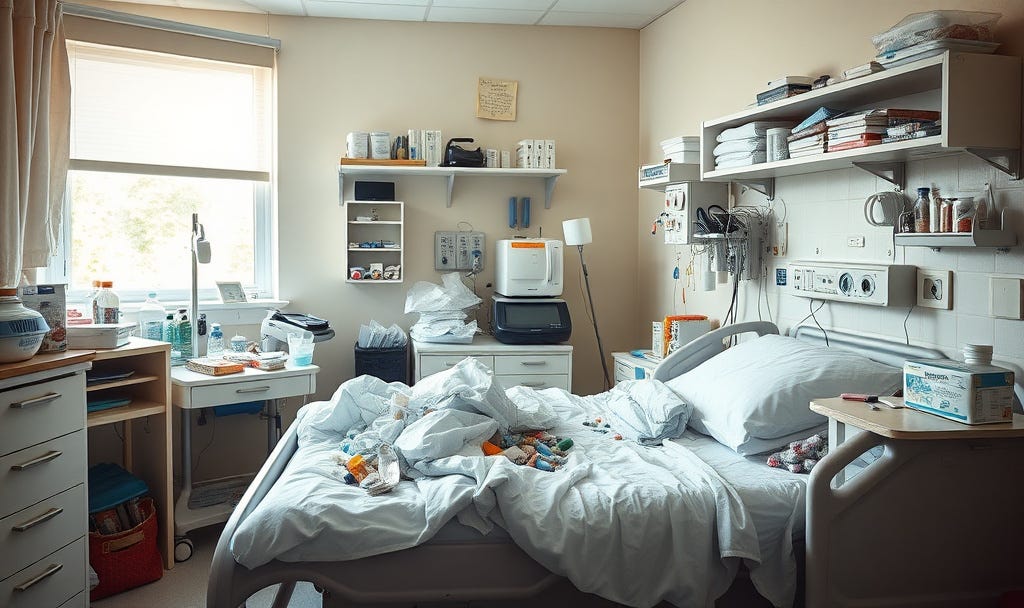
Nobody puts “12 hours in the ER, transfer by ambulance, and emergency hernia surgery” on their Sunday bucket list. But life isn’t interested in your plans. Instead, it tosses you into the fluorescent, sterile world of the hospital, shoves you into a paper gown, and strips you of every illusion of control you thought you had.

The Hospital: Cold Floors, Grippy Socks, and the Smell of Disinfectant

Let’s get real about the hospital. The air tastes like bleach and plastic. The floor is so cold your toes curl, but you’re issued those ridiculous grippy socks—bright yellow, like a warning sign for “fall risk.” Every surface is hard or sticky or both. The bed is supposed to help you heal, but no matter how you mash the buttons, you can’t get comfortable. You ask for more pillows, which helps for about 20 minutes. The sheets are scratchy. There’s always a faint beeping somewhere, and the hallway light slices under the door even when you try to cocoon.

And the indignity. The hospital gown hangs off you like a surrender flag. More people saw my ass in 36 hours than in the last 15 years—maybe in my whole adult life. If you need to pee, you have to call someone, and then they stand there like a prison guard while you try to pretend this is normal. There are straws in weird little cups that taste faintly of sanitizer, and every time you move, an IV line tugs at your arm. The silence is loud, and the noise is even louder.

The scariest part? The back-and-forth in your head. What if this is something worse? What if they missed something? What if my body never feels normal again? The ambulance ride is a bouncing, uncertain blur, every pothole a reminder that you’re not in control—of the ride, of your body, of anything.

When Your Body Puts on the Brakes (and Why It Does)

Here’s the truth nobody wants to hear: if you run yourself ragged long enough, your body will stop you. I’m always the one in motion—work, family, projects, helping others. I don’t just dislike slowing down; I resent it. But the human body isn’t built for endless hustle. Stress, lack of rest, pushing through warning signs—your nervous system keeps the score. Cortisol goes up. Your immune system tanks. Inflammation builds. Old injuries flare. New ones sneak in. Eventually, something breaks: your mind, your gut, your heart, or in my case, a chunk of muscle wall that decided it was done holding up the show.

It’s not just “mind over matter.” Bodies are designed to protect us—even if that means staging a full-blown revolt. We need rest, nourishment, boundaries, and a little grace. Self-care isn’t just bubble baths and candles; it’s answering your body before it has to scream.

Family Curveballs: When Life Decides It’s Game On

Of course, my own hospital drama wasn’t enough. A week before, my husband went ice fishing with my dad, got thrown out of a sled behind a snowmobile, and came back with a broken ankle, a couple of toes pointing in the wrong direction, and—because the universe loves a plot twist—a brand-new diabetes diagnosis. No warning, no symptoms, just “Congratulations, here’s your insulin prescription.”

Our house turned into a field hospital overnight. Suddenly, I’m learning wound care, insulin injections, and how to keep a grown man from trying to “just walk it off.” My kids are bouncing between grandparents and hospital rooms, trying to make sense of it all. There are pill bottles and medical bills and follow-up appointments, and the whole rhythm of our lives gets rewritten. And you know what? That’s recovery in real life. It’s not about being perfect; it’s about adapting, improvising, and holding onto each other through the chaos.

Recovery, Hospitals, and the Impossible Choices

Let’s talk about pain meds. Hospitals are full of them—rolling carts of temptation, all neatly labeled. For me, painkillers were never “the one,” but I danced with them enough to know the steps. So when the doctor asked if I wanted a prescription to take home, I hesitated. The pain was real, but so was the risk. I said no, even though it would’ve been easy to say yes. Not because I’m some recovery saint, but because I know myself. I know what it’s like to look at a bottle and think, “Just this once.”

But that’s not the only impossible choice. There’s the decision to be honest about your history with addiction when you know you could be judged, flagged, or treated differently. There’s advocating for what you need when you know the staff is drowning in work. There’s the fear: Will they believe me? Will they help me? Will I be safe?

Here’s what helped: I was honest. I asked for what I needed. I told them my history, my concerns, my wishes. And when I did, most of the staff responded with humanity. They talked to me like a person, not a diagnosis. They gave me choices. That’s not always the case, but it’s worth fighting for.

Advocating for Yourself: How to Speak Up When It’s Hard

Advocacy isn’t about being aggressive; it’s about being clear. You can be scared and still be your own best champion. Here’s what I said:

  • “I’m in recovery. Pain meds are risky for me. Can we talk about alternatives?”

  • “If I need something for pain, can we keep it minimal and have a plan for accountability?”

  • “I want to be honest. I hope you’ll work with me.”

And yeah, sometimes you have to say, “I know you’re busy, but I really need help right now.” You will not always be comfortable. Do it anyway.

The Noise, the Silence, and How to Sit Still

Hospitals are noisy—beeps, alarms, the squeak of rubber soles, the clatter of carts, the endless murmur of voices in the hall. But they’re also profoundly silent. In those quiet moments—when visiting hours are over, the lights are dim, and you’re left alone with the ache in your belly and the ache in your head—that’s when the work starts.

Sitting with silence is its own kind of medicine. It’s uncomfortable, sometimes terrifying. But if you can’t be alone with yourself, the world will always feel too loud.

What helps? Not just the usual “meditate and journal” stuff (though those are great, if they work for you). Try these out-of-the-box ideas:

  • For the restless: Doodle on your hospital meal napkin. Make up a story about the nurse’s shoes. Count ceiling tiles, but assign each one a memory.

  • For the anxious: Ask for a warm blanket and focus on its weight. Trace your breathing with your finger on your palm.

  • For the thinkers: Plan your “First thing I’ll do when I’m out of here” list. Write a letter to your future self.

  • For the young at heart: Make shadow puppets on the wall. Text a friend a really, really bad joke.

  • For the overwhelmed: Give yourself permission to feel everything—anger, fear, gratitude, boredom. All of it is valid.

There’s no right answer. Silence is not the enemy. Sometimes, it’s the beginning.

Recovery Scripts: What to Really Say to Your Doctor

Let’s get you some actual lines you can use:

  • “I need you to know I’m in recovery. I’m not here to drug-seek—I’m here because I’m in real pain and I want safe options.”

  • “Please don’t flag me in your notes as ‘drug-seeking’ just because I’m honest about my history. I want to get better, not high.”

  • “I’m nervous about pain management because of my past, but I need help. Can we come up with a plan together?”

  • “I’m scared you won’t take me seriously if I tell you, but I need you to know I’m a person who’s worked hard for my recovery.”

Say it messy. Say it scared. Just say it.

Rant Time: The Trolls, The Ignorant, and The Northwoods Doctor

Okay, let’s talk about the ugly side. Some people, even in healthcare, are complete assholes. I got a message from a doctor—yes, a real, credentialed “healer”—saying addicts are losers, clogging up the system, better off dead. Let that sink in. This guy works in the same system that took care of me. He probably walked the same halls.

But here’s the beautiful part: the community leapt in. People who’d been through it, people who’d worked in it, people who just have hearts big enough to call out cruelty. They showed up, told their stories, drowned out the hate. The hospital system was notified, too. Just know, somewhere in the Northwoods, there’s a doctor who’s both a professional and a disgrace.

And for every idiot hiding behind a fake profile, there are a dozen real people who will stand up and say, “No, you’re wrong—here’s what recovery really looks like.”

The Good, The Bad, The Ugly, The Beautiful

Recovery isn’t a straight line. You get pain and healing, setbacks and progress, family chaos and unexpected kindness, trolls and allies, awkward conversations and moments of fierce pride. It’s the whole damn spectrum.

Pep Talk & Call to Action: Progress is Progress

To anyone in recovery: Show up, even when you’re scared, even when you’re tired, even when you’ve got an IV in one arm and your ass hanging out of a hospital gown. You matter. Your honesty matters. Your progress—messy, slow, or sideways—counts.

To the professionals: Listen. Ask the hard questions. Treat us like people, not problems. You might be the only safe person someone sees all week.

To friends and families: It’s messy. Love your people anyway. Show up for the ugly days and the beautiful ones.

And to the trolls? Thanks for the engagement—and for reminding us why these conversations matter.

Progress is progress. Even if all you did today was survive, advocate, or just breathe. Keep going. You’re worth it.

Real Updates

It’s almost been two months since I walked away from what I guess I’d call my corporate clinical job. Seven days shy of that marker, and hon...